
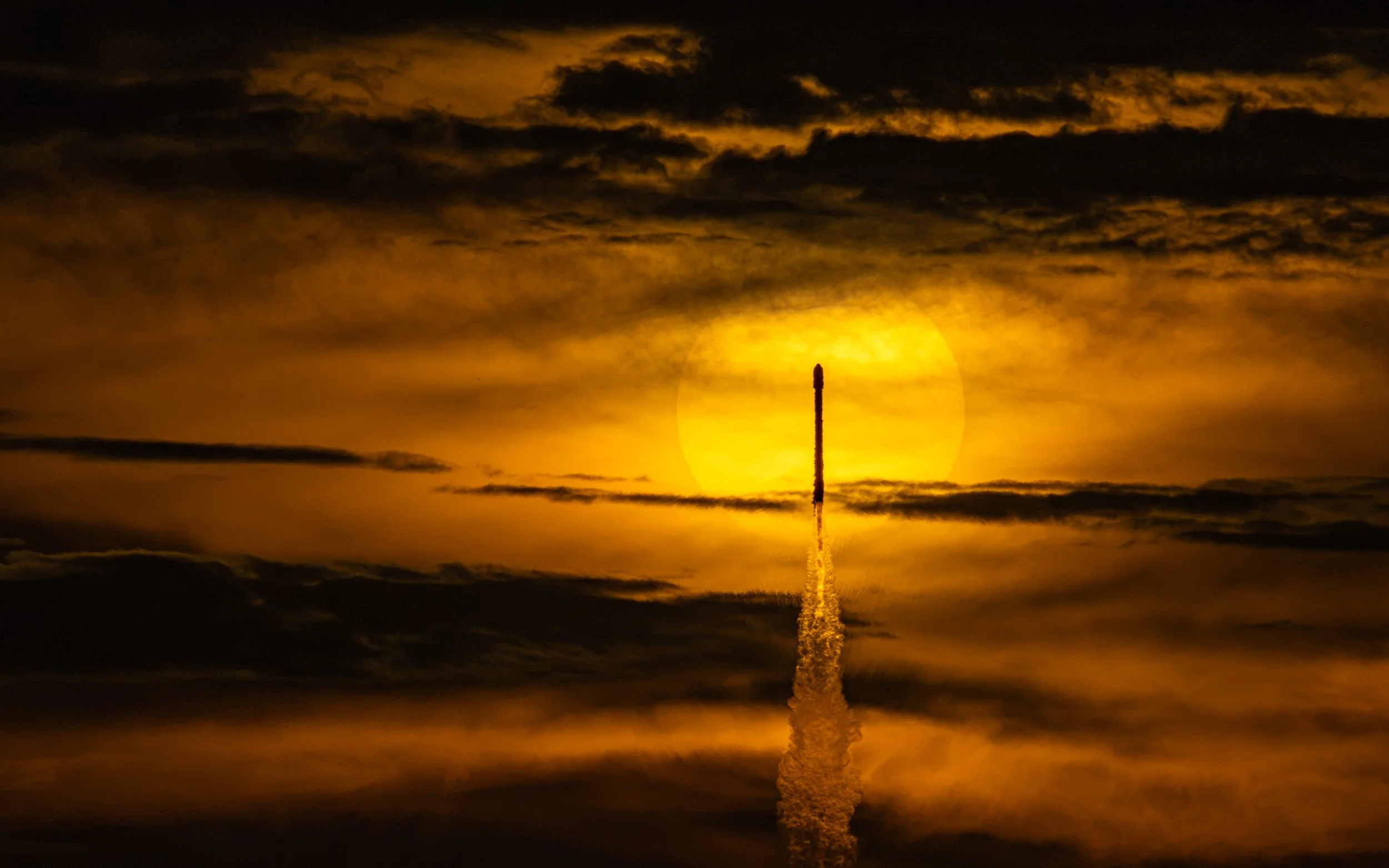
A SpaceX Falcon 9 crosses the face of the newly risen Sun roughly 20 seconds into flight during this morning's Starlink 10-50 launch (July 5, 2026, 6:50 a.m. EDT) from Space Launch Complex 40, Cape Canaveral Space Force Station. The mission deployed 29 Starlink V2 Mini Optimized satellites; the first stage, B1090, flying its 13th mission, landed on the droneship A Shortfall of Gravitas.This flight also carried a secondary payload mounted on the booster itself: two Fabships from Besxar (@BesxarFoundry), pilot reusable manufacturing pods testing how semiconductor wafers hold up through the stresses of launch and re-entry.Shot from roughly 9.7 miles west-southwest of the pad, which required a pre-dawn half mile hike each way to reach the right alignment for the transit. Ripples along the edge of the solar disk are shock waves from the vehicle's passage bending the atmosphere's index of refraction.
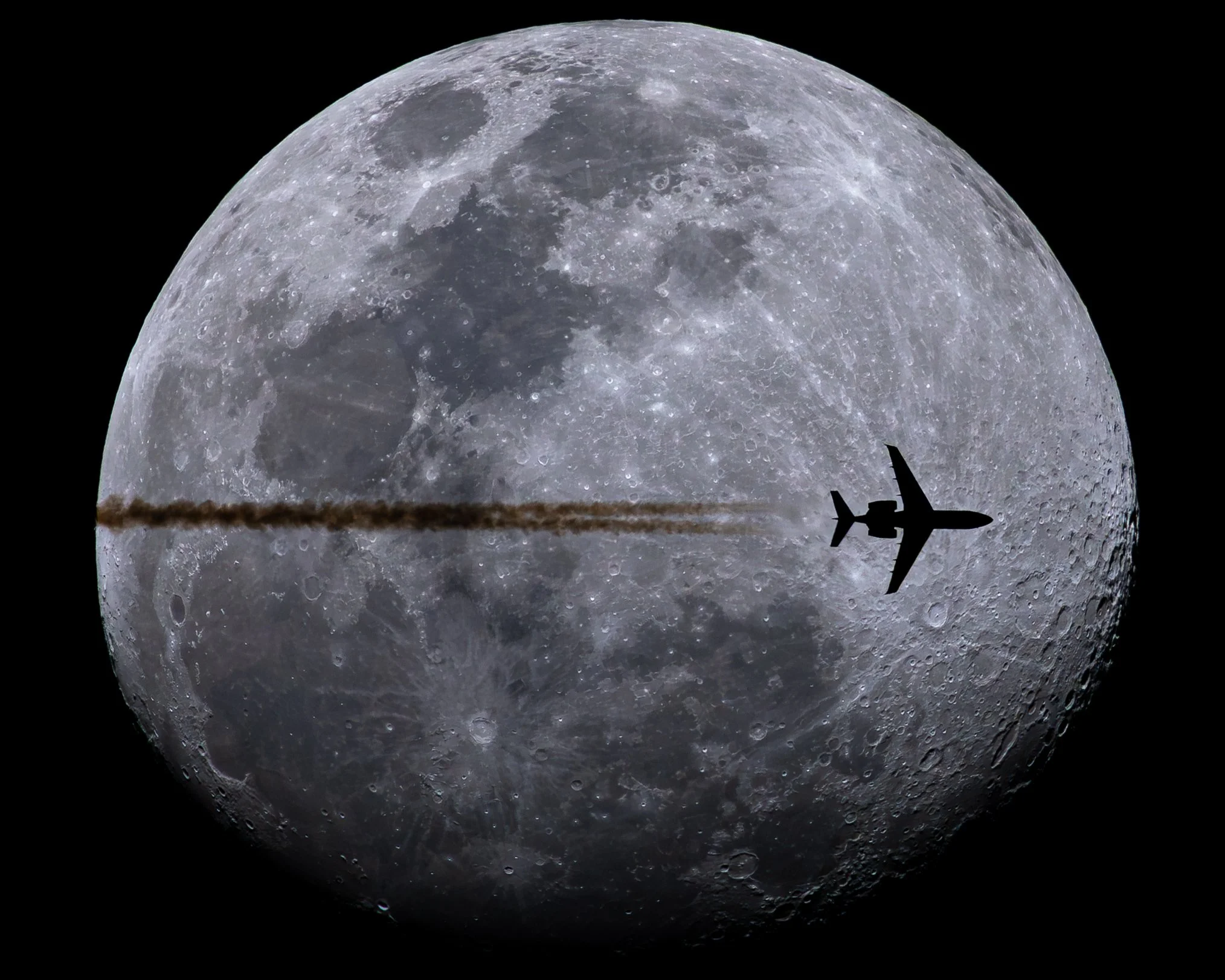
From Thursday night (January 29, 2026), a Bombardier Challenger 300 (reg N578XJ) traces a path in front of the Moon over the Space Coast.Operated by Vista America, the private jet was flying from Chicago (MDW) to Miami (MIA) at 44,000 feet and 463 knots.(📷: me, flight data: Flightradar24)
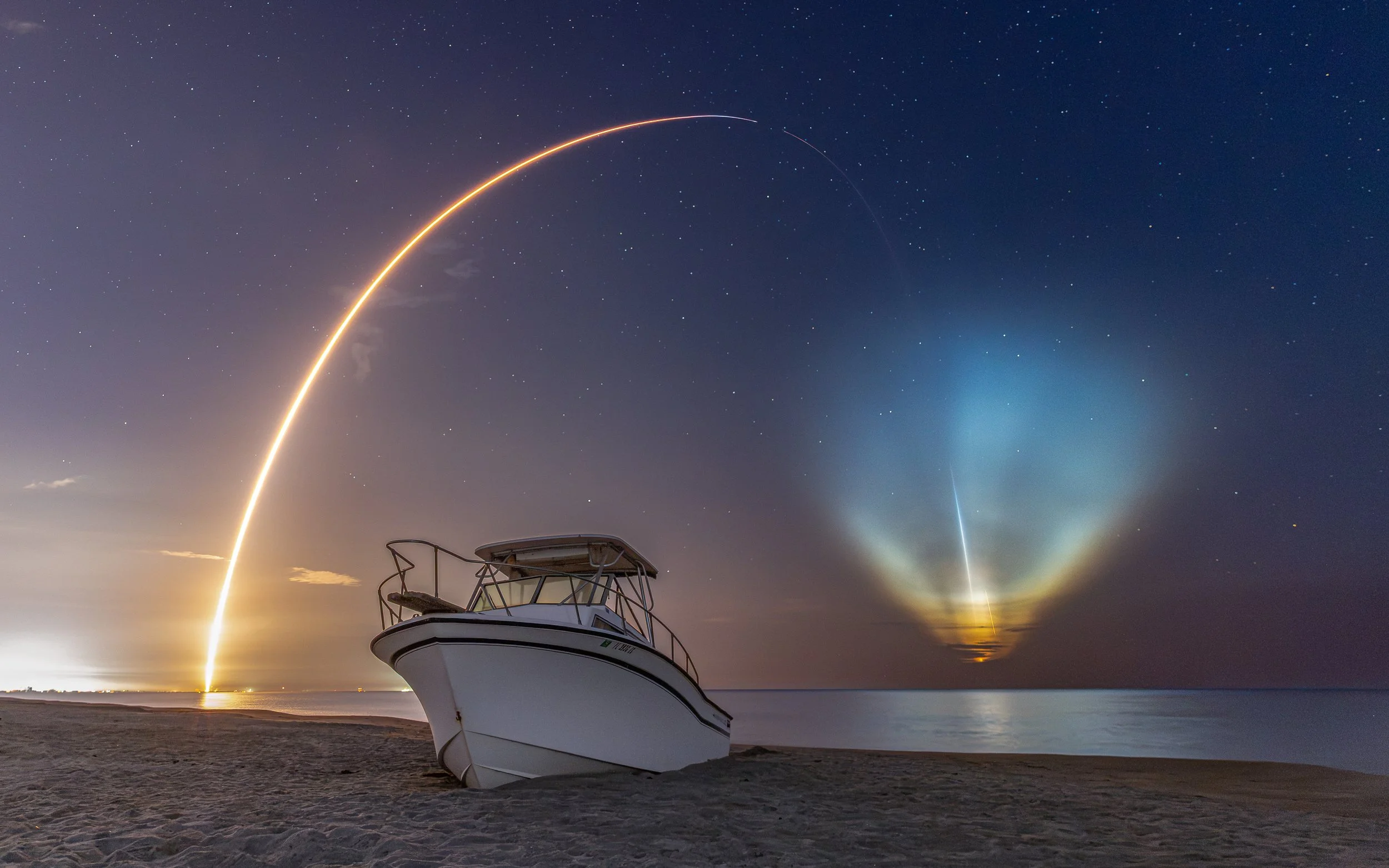
I went out hoping for a "space jellyfish," and instead got the "end of an era."Regular Falcon 9 Starlink launches had become routine on the Space Coast, going up every few days. Then, a few months ago, things began to shift. A droneship moved to the Pacific. LZ-1 closed. The crew access arm came off LC-39A. The cadence slowed.After the Tuesday morning Starlink 10-49 launch, SpaceX Vice President of Launch Kiko Dontchev confirmed it: this mission was SpaceX's final planned Falcon 9 Starlink launch from Florida. After roughly 260 Starlink missions from the Cape over the past seven years, future Starlink launches from Florida are expected to transition to Starship. Falcon 9 will continue flying Starlink missions from Vandenberg Space Force Base in California.Falcon 9 isn't leaving the Cape. It will keep flying NASA, commercial, and national security missions from here. It's the dedicated Starlink flights that are ending.They ended on a high note. Booster B1067 flew for a record 37th time, the first in the fleet to reach that mark, on what was also the 100th Falcon 9 launch of 2026. B1067 debuted in June 2021 on CRS-22 and carried the Crew-3 and Crew-4 astronauts before becoming a Starlink workhorse.This view of the 5:33 a.m. EDT launch combines the 447-second exposure I posted right after launch with a second frame captured immediately after, adjusted to bring out the downrange "space jellyfish," which was better seen much farther up the eastern seaboard. That second 3.2-second exposure contains the wide "space jellyfish" and supplied the sky for the "starry sky" version.Congratulations to SpaceX and the teams on the ground. I'll miss the rhythm of these launches. But 39A is being rebuilt for something much bigger, and I'm looking forward to photographing it.TL;DR: I'll be getting more sleep for a while.