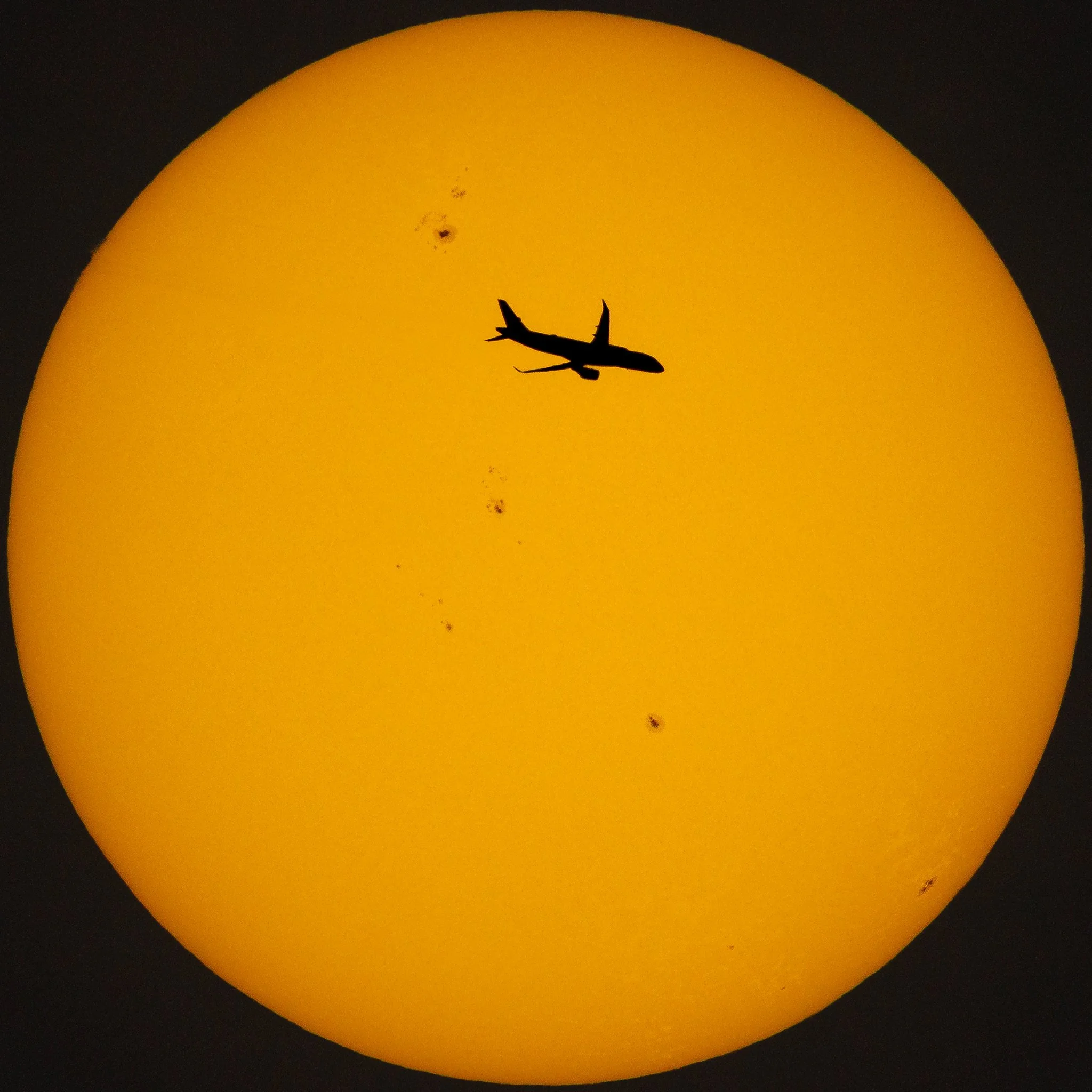
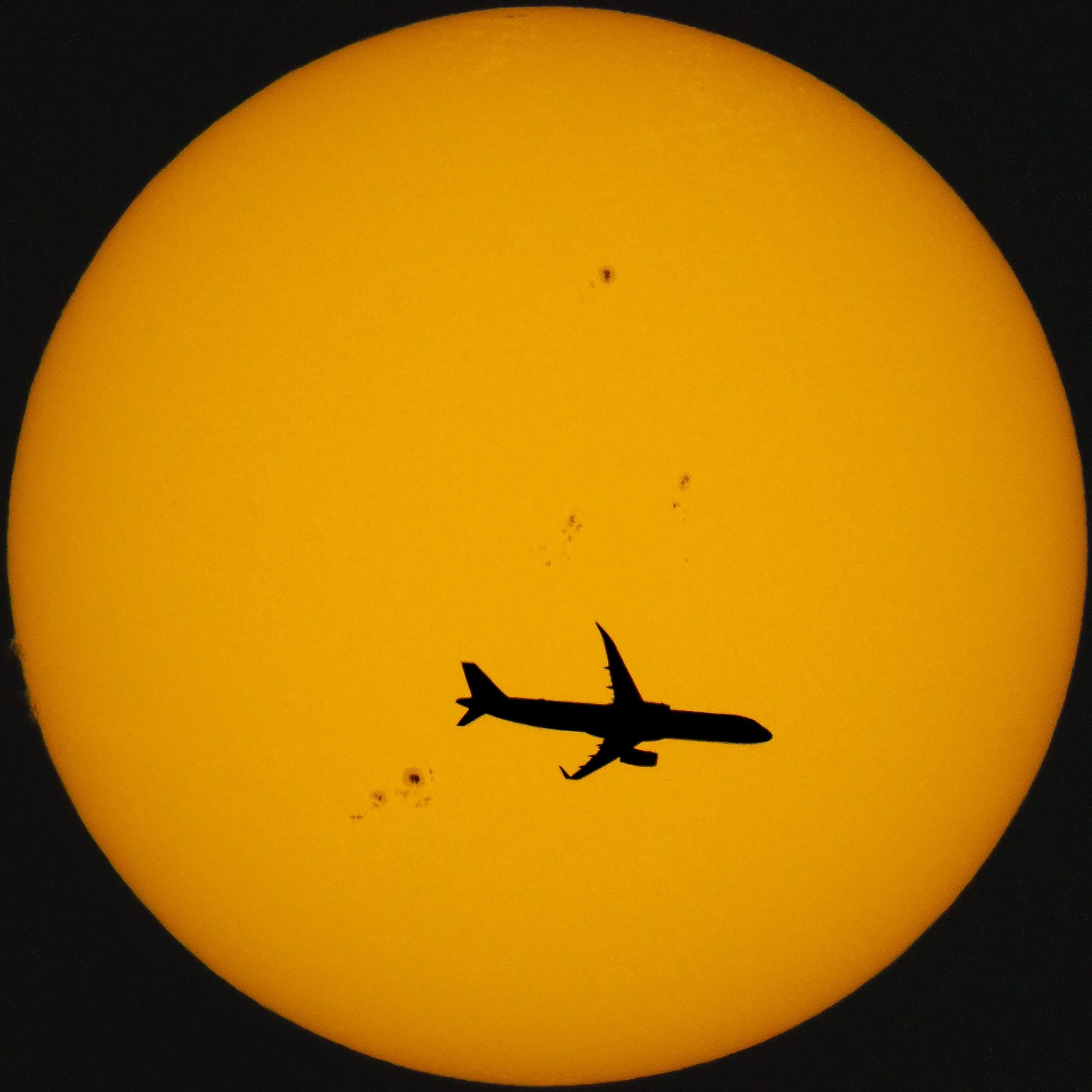
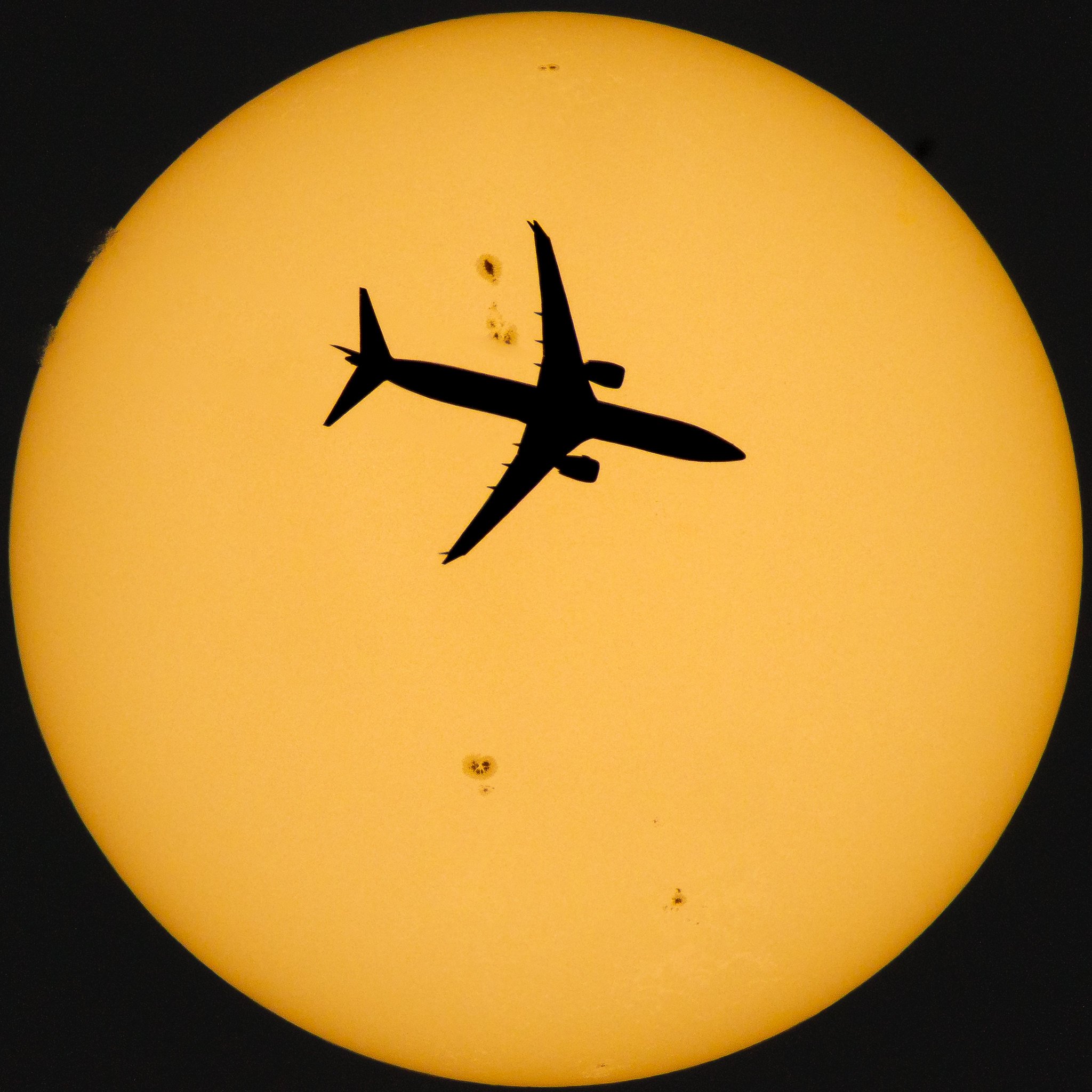
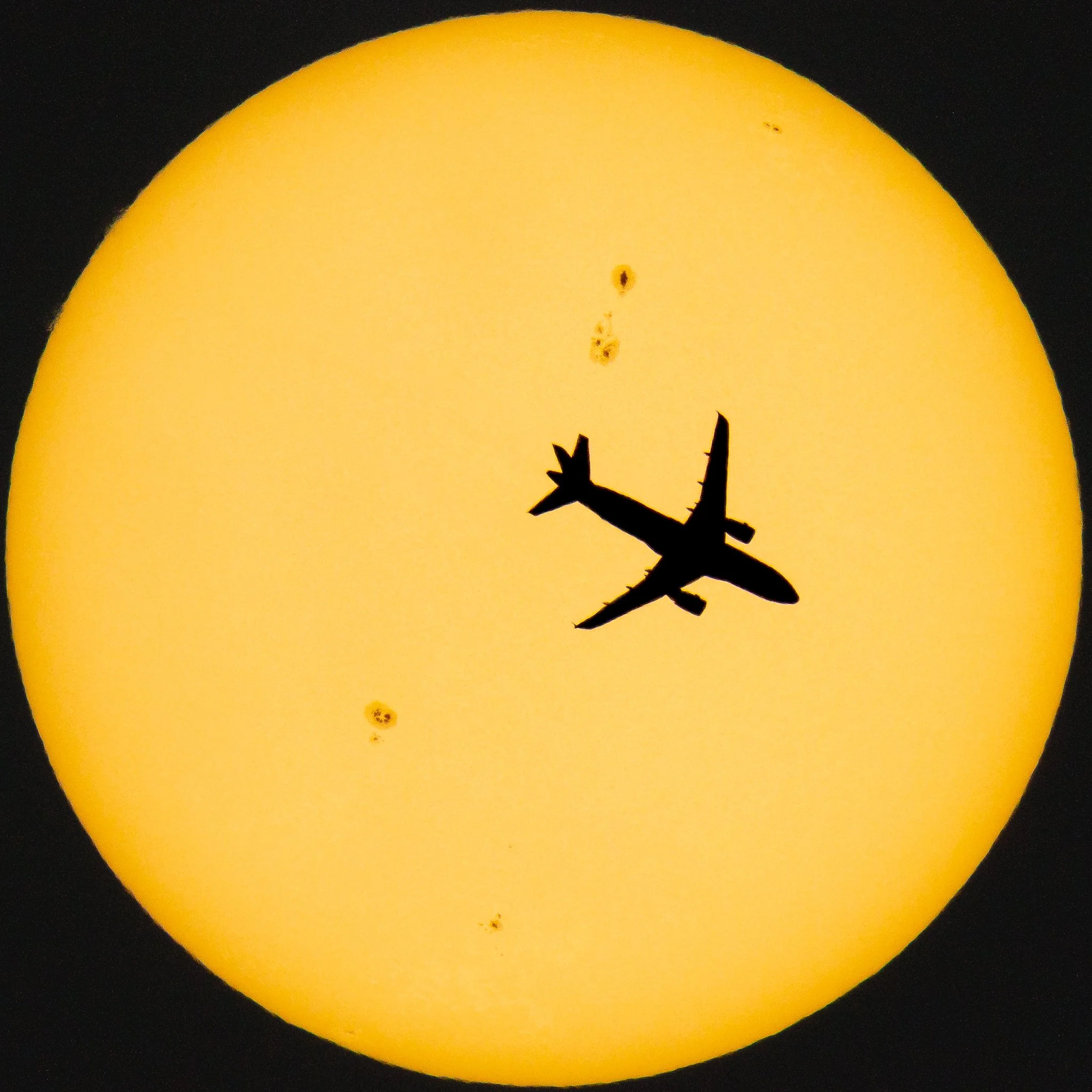
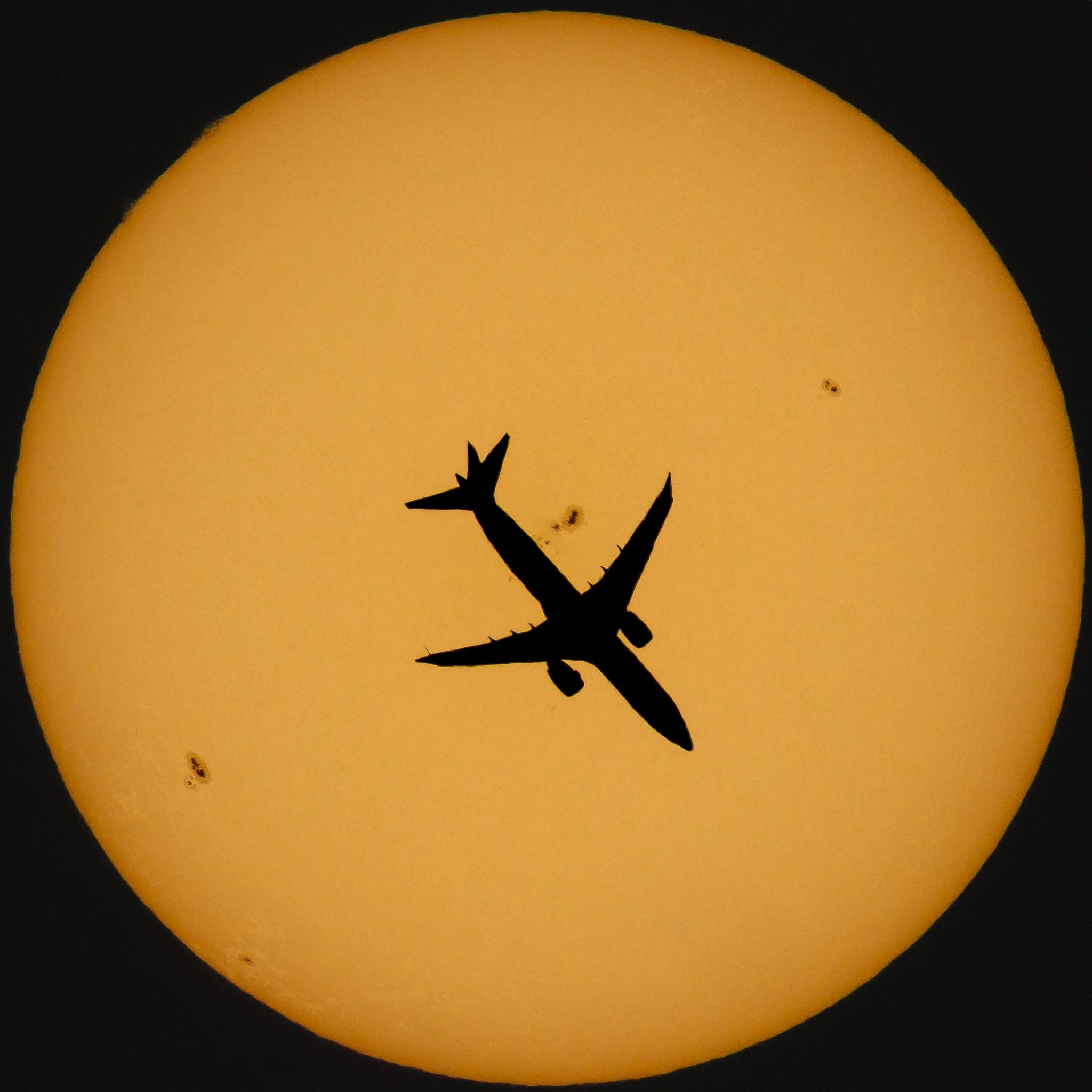
737-747-757-767
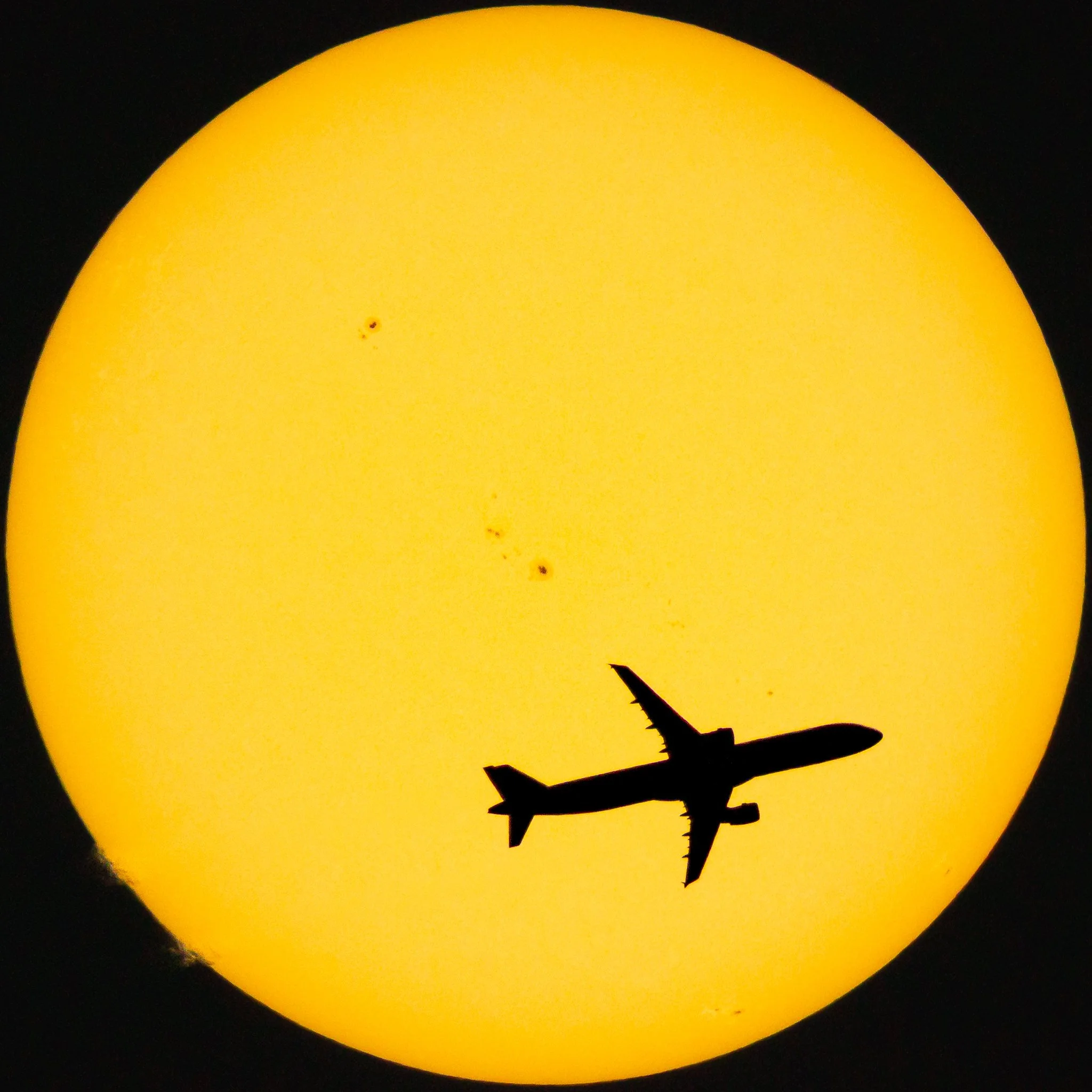
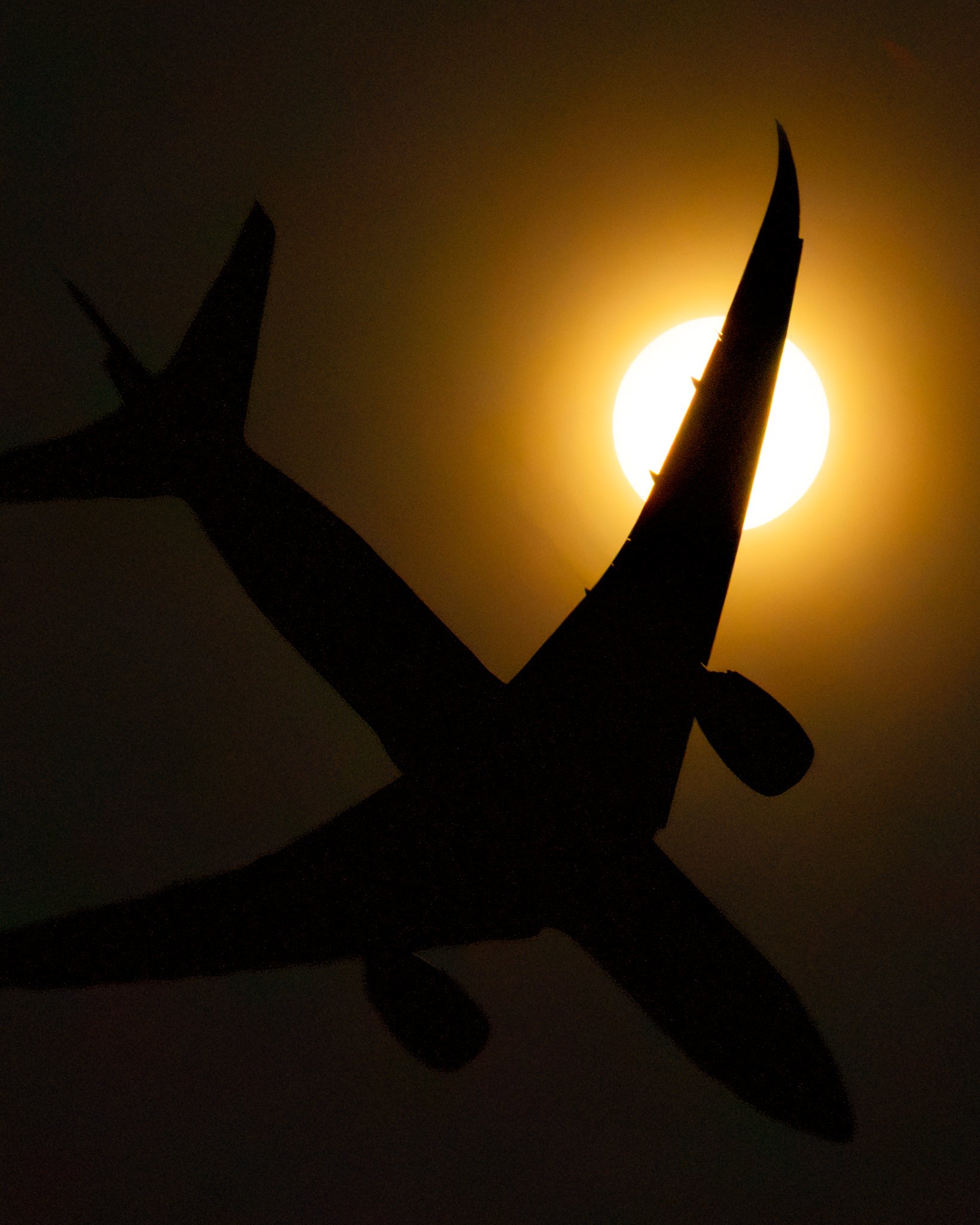
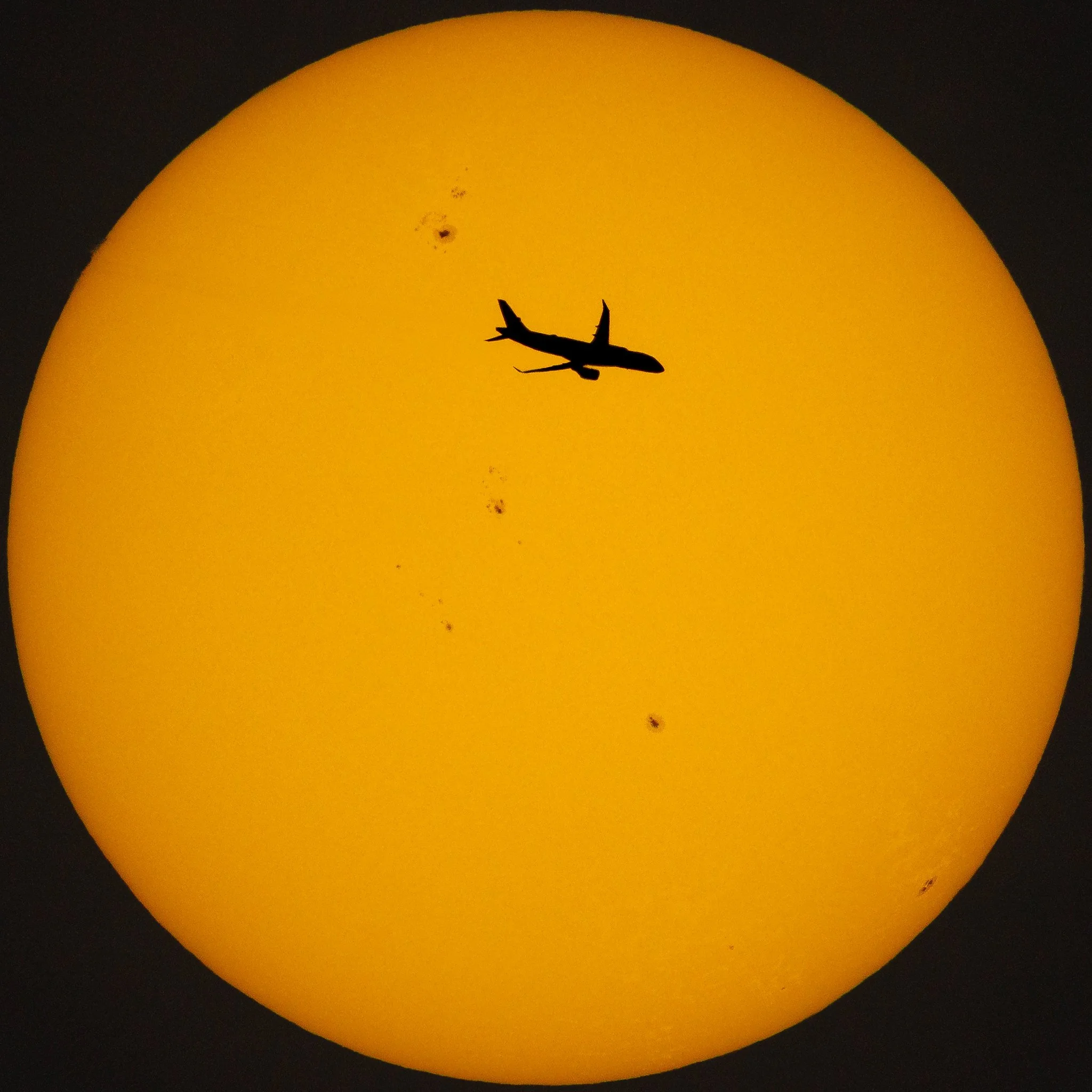
The Space Coast was recently treated to a Boeing family reunion. By pure coincidence, four planes crossed the Sun, in this order, over a span of 49 minutes.
First up was the baby of the group: a 737 MAX 9 (N77584), United 1073, Washington-Dulles to Miami. Delivered to United in January 2025, this is the actual aircraft that made United the first airline in the world to reach 1,000 mainline jets; a year and a half old.
Next, a Cathay Pacific Cargo 747-8F (B-LJH), flight 72, Anchorage to Miami. Delivered new in 2012, so fourteen years old, and a reminder that the Queen of the Skies' story is winding down. Boeing built the very last 747 in January 2023, ending a 56-year, 1,574-aircraft run.
Then a Delta Air Lines 757-200 (N551NW), flight 1883, Atlanta to St. Thomas. Pushing 25 years old and a genuine Northwest Airlines survivor, still carrying a registration from before the 2008 merger. Boeing never really built a replacement for the 757, and most of its Northwest-tagged siblings are already retired and scrapped. This is one of the last of them still flying.
Last, the oldest by far: an Air Canada Cargo 767-300F (C-FPCA), flight 7260, Toronto to Miami. Thirty-seven years old, built for the long-defunct Canadian Airlines back in 1989, it flew passengers for three decades before COVID grounded it in 2020. It came back to life as Air Canada's first-ever converted freighter.
Four different airplanes, four different decades of Boeing history, all over one Florida morning.
Details: ISO800, f/13, 1/3200-sec for each, shot with a Canon USA R5mii and RF200-800 w/ 1.4x TC through an ND100000 filter.
Big shoutout to John Kraus Photos for the collab, and although I’d have (probably) noted the Boeing series when I imported the photos, for the record, John realized I had the 737-747-757-767 series before I did; in other words, this was entirely unplanned. And there was one interloping Airbus (not shown) in the middle; an intermission, of sorts.
📷:me, flight details: Flightradar24.com
Globalstar 2-R Launch 1 by SpaceX
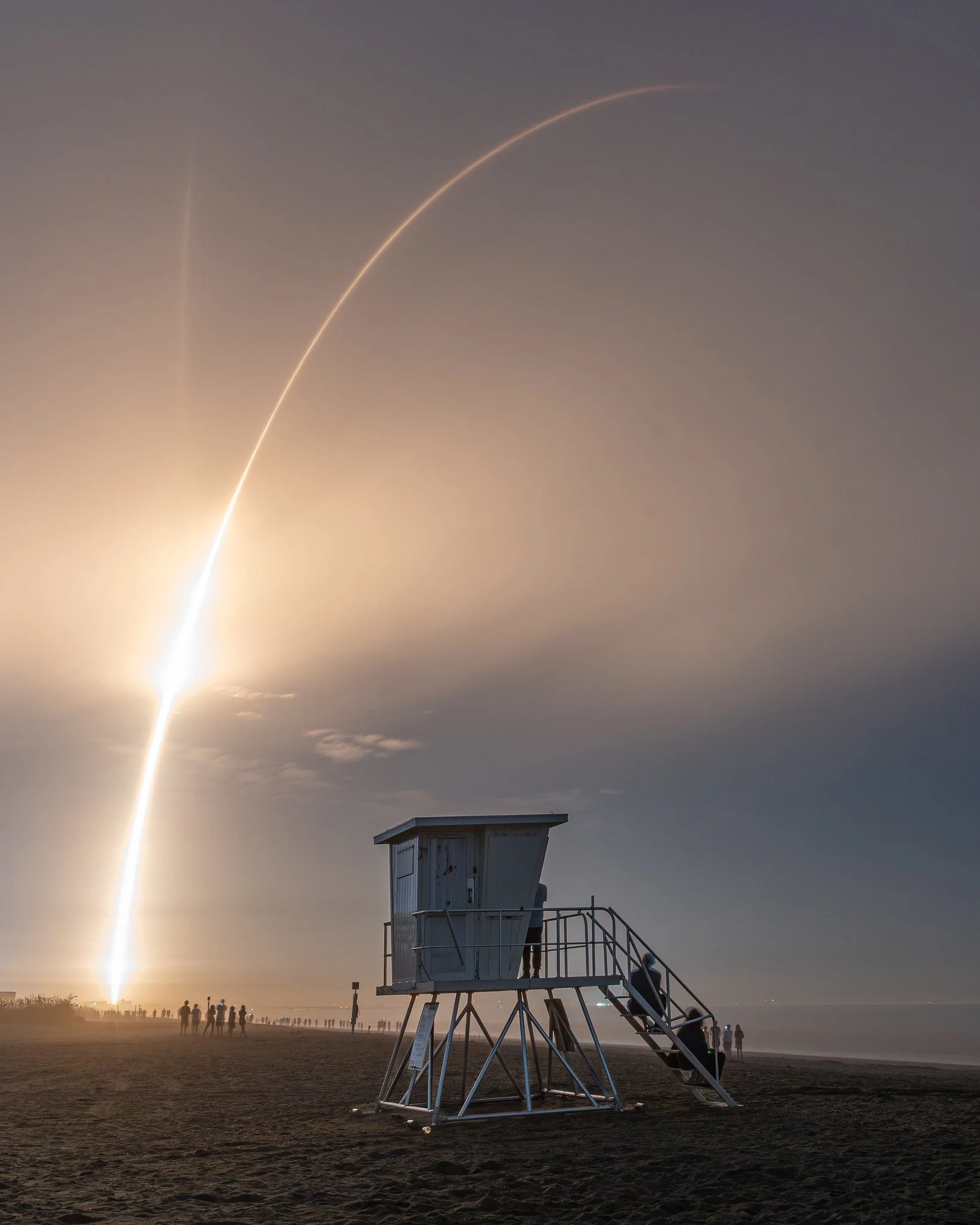
Presented for your consideration, these are images from the 9:12 p.m. (ET) Saturday launch of the Globalstar mission by SpaceX. Approximately 8 minutes after liftoff, the booster returned to LZ-40, but not before the boostback burn of the first stage created a nebula effect.
The streak shot is a single, 468-second exposure showing the whole sequence from Titusville, and the two close-ups were captured with a 500mm lens.
Globalstar 2-R Launch 1 by SpaceX
Presented for your consideration, these are images from the 9:12 p.m. (ET) Saturday launch of the Globalstar mission by SpaceX. Approximately 8 minutes after liftoff, the booster returned to LZ-40, but not before the boostback burn of the first stage created a nebula effect.
The streak shot is a single, 468-second exposure showing the whole sequence from Titusville, and the two close-ups were captured with a 500mm lens.
Globalstar 2-R Launch 1 by SpaceX
Presented for your consideration, these are images from the 9:12 p.m. (ET) Saturday launch of the Globalstar mission by SpaceX. Approximately 8 minutes after liftoff, the booster returned to LZ-40, but not before the boostback burn of the first stage created a nebula effect.
The streak shot is a single, 468-second exposure showing the whole sequence from Titusville, and the two close-ups were captured with a 500mm lens.
Sunset over Lake Washington
Space Coast sunset
(Wed, August 12, 2026)
Solar Transit
Airbus A321 (N185UW), American 2899, Miami to New York (JFK), crossed the Sun this afternoon over Melbourne, Florida @ 29,000 ft & 455 kts, a cluster of sunspots scattered across the disk. ð·: me, flight data: @flightradar24
Sunset over Lake Washington
Thursday sunset, Lake Washington. Peak Florida.
Sunset over Lake Washington
Wednesday sunset from Florida's Space Coast; diet eclipse.
Solar Transit
An Airbus A321 (N54561), United 2071, climbing out of Orlando bound for Chicago and crossing the Sun over Florida's Space Coast Sunday; seen here @ 11,200ft & 392kts, just 6 mins off the ground, the low evening light (& clouds) made the scene semi-dreamy.
Details: ISO6400 (!), f/13 and 1/1600-sec with a @CanonUSA R5mii & RF200-800 & 1.4x TC with an ND100000 solar filter, handheld out my car window.
Big shout-out to @johnkrausphotos for the collab; this was more of a chase than I'm accustomed to, but it worked out well.
ð·: me, flight data: @flightradar24
Solar Transit
That's a Boeing 787-8 Dreamliner (reg G-TUIA) a mere 3,000 feet overhead on approach to land at Melbourne Orlando International Airport - MLB, right wing transiting the Sun.
TUI Airways flight TOM754 was at the end of an 8:21 flight from New Castle (NCL).
The Space Coast sees a few TUI 787s each day; I'm rarely in a position to do something photographically with them. This isn't exactly the shot I had in mind, but it is, technically, a solar transit, so, even with an unusual scale, it's on-brand for me.
Details: ISO5000, f/13 and 1/1250-sec with a Canon USA R5mii and RF200-800mm through an ND100000 filter to deal with the Sun. I went wider than normal because, well, the plane is huge, and I increased the ISO to bring out more of the silhouetted plane.
📷:me, flight data: Flightradar24.com
Solar Transit
Thursday, August 6 over Florida's Space Coast, an Airbus A320 (N663JB), JetBlue 241, Orlando to Nassau, crossed the Sun @ 14,850 ft (and climbing) & 376 kts, contrail trailing off one wing, a couple of small sunspots on the disk.
Details: ISO800, f/13 & 1/2500 with a Canon USA R5mii & RF200-800 w/ 1.4x TC and an ND100000 solar filter. (Pro tip: Don't point lenses or your eyes at the Sun without protection.)
And, a hearty shout-out to John Kraus Photos for the good collab.
ߓ纠me, flight data: Flightradar24.com
BlueBird 11-13 by SpaceX
Hazy, still beautiful: Many were out for the early Wednesday morning SpaceX Bluebird 11-13 Falcon 9 launch, seen here from Cocoa Beach.
This was the 30th flight for booster B1077.
Bonus: A prominent light pillar was very visible as the rocket climbed skyward.
American Airlines Lunar Transit
Monday morning over Florida's Space Coast as an Airbus A319-132 (N806AW) passes by the waning Moon.
American Airlines flight 1733 was traveling from Orlando (MCO) to Miami (MIA), climbing through 15,625 ft at 408 knots.
Photo: me | Flight data: Flightradar24.com
Details: ISO 800, f/9, 1/1600-sec with a Canon USA R5 Mark II and RF200-800mm.
As I post this, I can already hear the cries that it's Photoshopped, but the glow around the plane is from the low Sun (this was about 60 minutes after sunrise), diffused by clouds. The plane is especially soft because I was actually focused on the Moon, since I couldn't find the plane behind nearby clouds. At the last moment I locked focus onto the Moon instead, and this is what I got.
Solar Transit
Breeze A220-300
@BreezeAirways 1019 (N224BZ), an Airbus A220-300 from Fort Lauderdale (FLL) to Myrtle Beach (MYR), crossed the Sun @ 32,225 ft & 430 kts, a clean evening transit with a few sunspots scattered across the disk. July 30. 📷: me, flight data: @flightradar24
Solar Transit
Breeze A220-300
@BreezeAirways 1019 (N224BZ), an Airbus A220-300 from Fort Lauderdale (FLL) to Myrtle Beach (MYR), crossed the Sun @ 32,225 ft & 430 kts, a clean evening transit with a few sunspots scattered across the disk. July 30. 📷: me, flight data: @flightradar24
Solar Transit
American A321
@AmericanAir 2017 (N150NN), an Airbus A321 from New York (JFK) to Miami (MIA), crossed the Sun @ 29,200 ft & 497 kts, closing out the month. July 31. 📷: me, flight data: @flightradar24
Solar Transit
@united 1674 (N17565), a Boeing 737 MAX 9 from Chicago (ORD) to Aruba (AUA), crossed the Sun @ 35,000 ft & 470 kts, passing right alongside a sunspot cluster. Forty-one transits in three weeks, and the Sun keeps giving me new backdrops. July 23. 📷: me, flight data: @flightradar24
Solar Transit
A Cirrus SR22 (N526CA) from Fort Lauderdale Executive (FXE) to Titusville (TIX) crossed the Sun @ 4,600 ft & 174 kts. Low and close at under a mile up, big enough in the frame to catch the propeller mid-blade. July 23. 📷: me, flight data: @flightradar24
Solar Transit
@AmericanAir 1826 (N702UW), an Airbus A319 from Charlotte (CLT) to Key West (EYW), crossed the Sun @ 36,000 ft & 453 kts. The same daily flight I caught on July 11, different airframe, same patch of sky. Sunspots above and below it this time. July 23. 📷: me, flight data: @flightradar24
Solar Transit
@WestJet 2500 (C-FYXC), a Boeing 737 MAX 8 from Toronto (YYZ) to Liberia, Costa Rica (LIR), crossed the Sun @ 34,025 ft & 474 kts, dead center. Sixty-one feet from the middle of the disk, the closest alignment of the collection so far. July 21. 📷: me, flight data: @flightradar24